Short answer
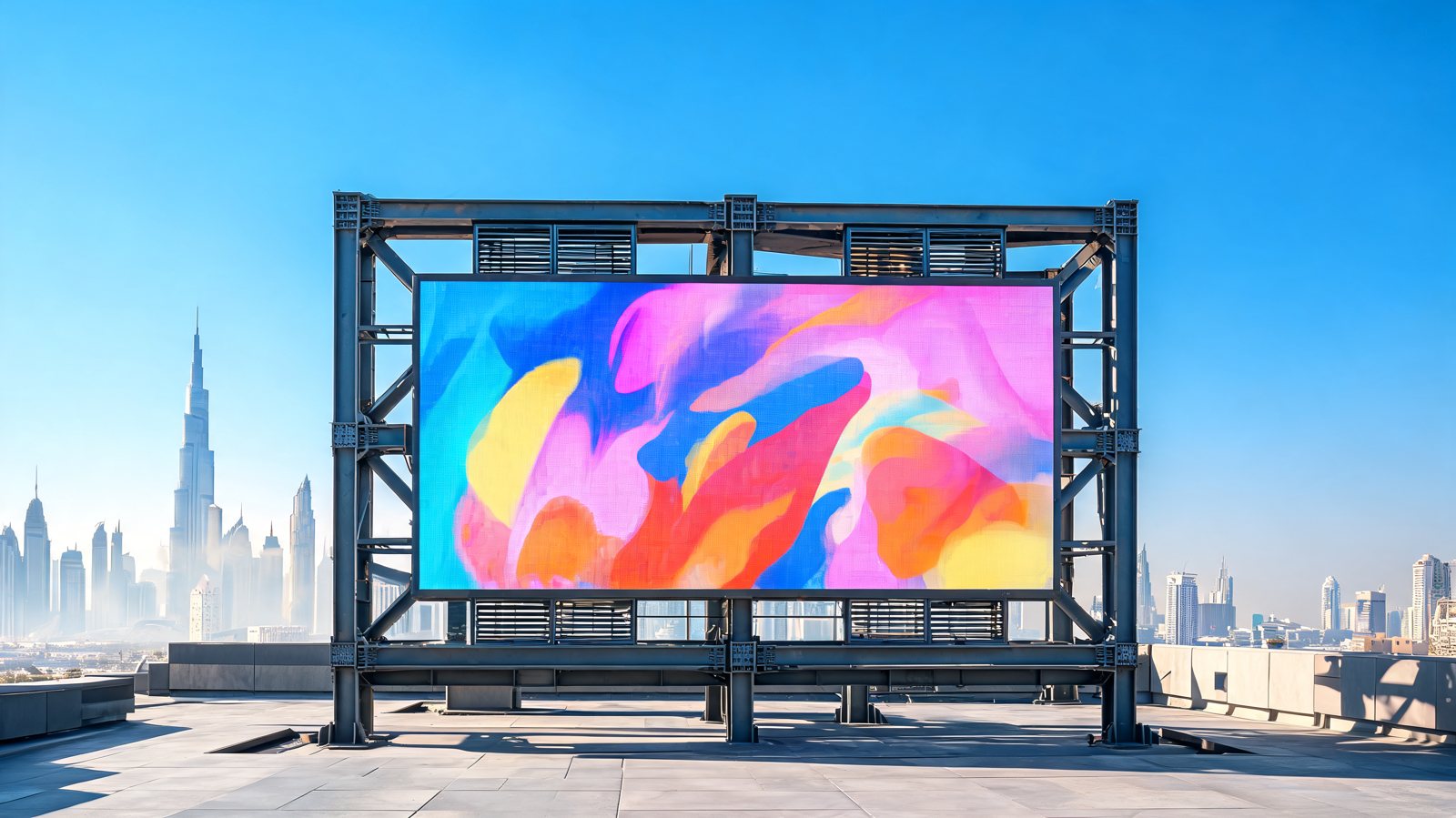
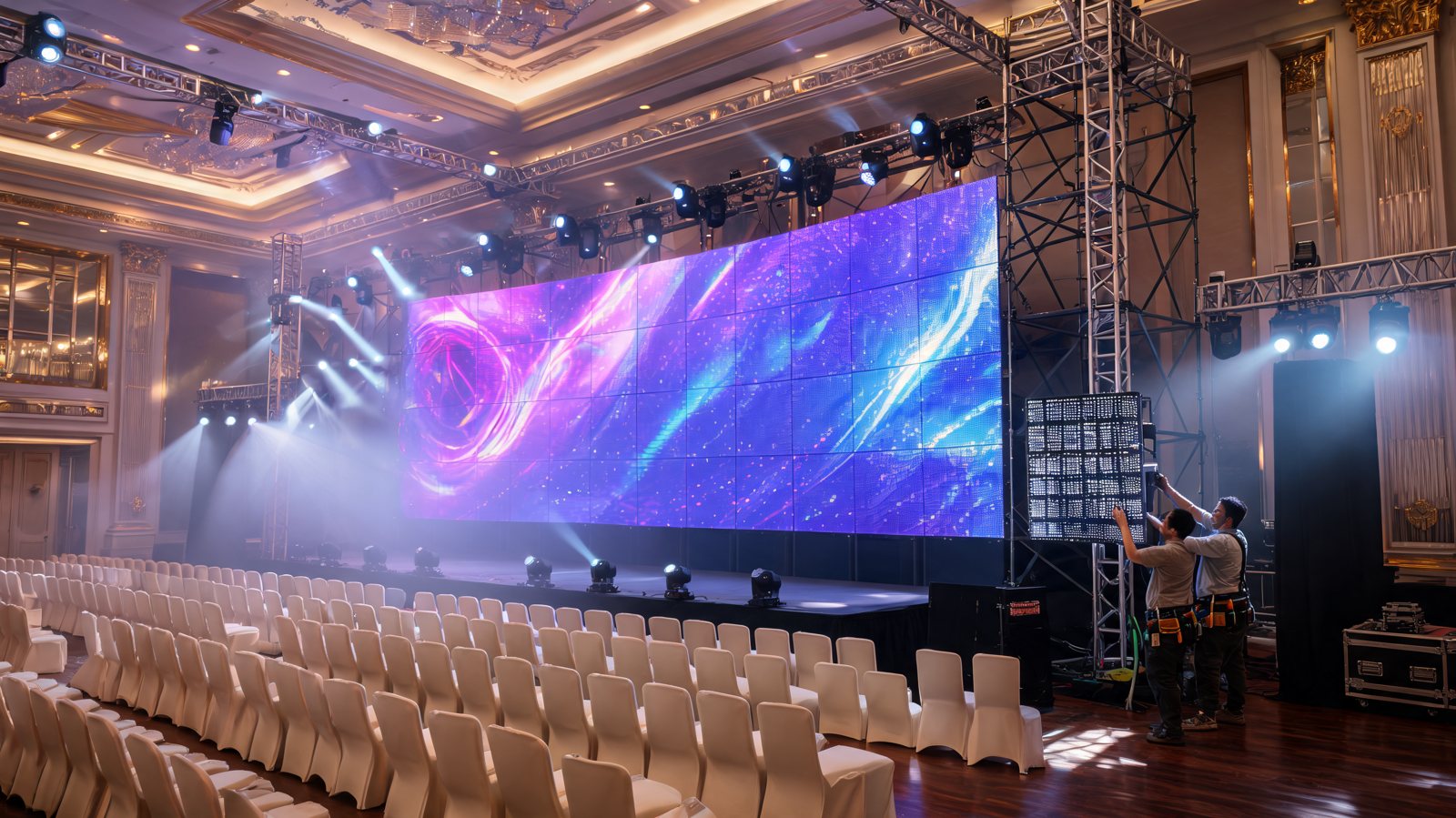
Outdoor LED screens are 5–8 times brighter, sealed against dust and water (usually IP65 at the front), built for heat, and use larger pixels because people see them from further away. Indoor screens are dimmer, lighter and finer, made for close viewing. Using an indoor screen outside will fail quickly in UAE conditions.
The main differences
What about shop windows and covered areas?
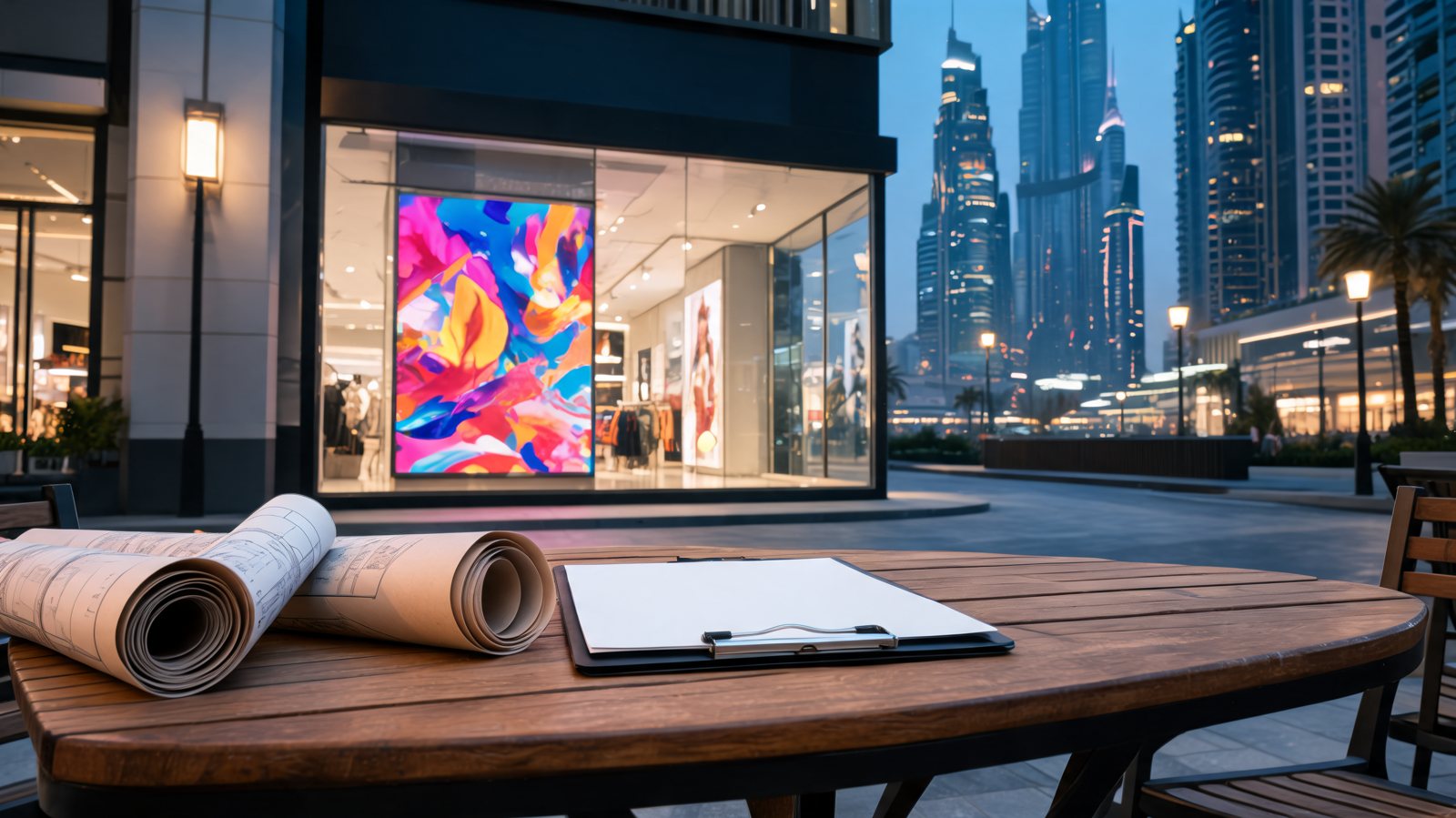
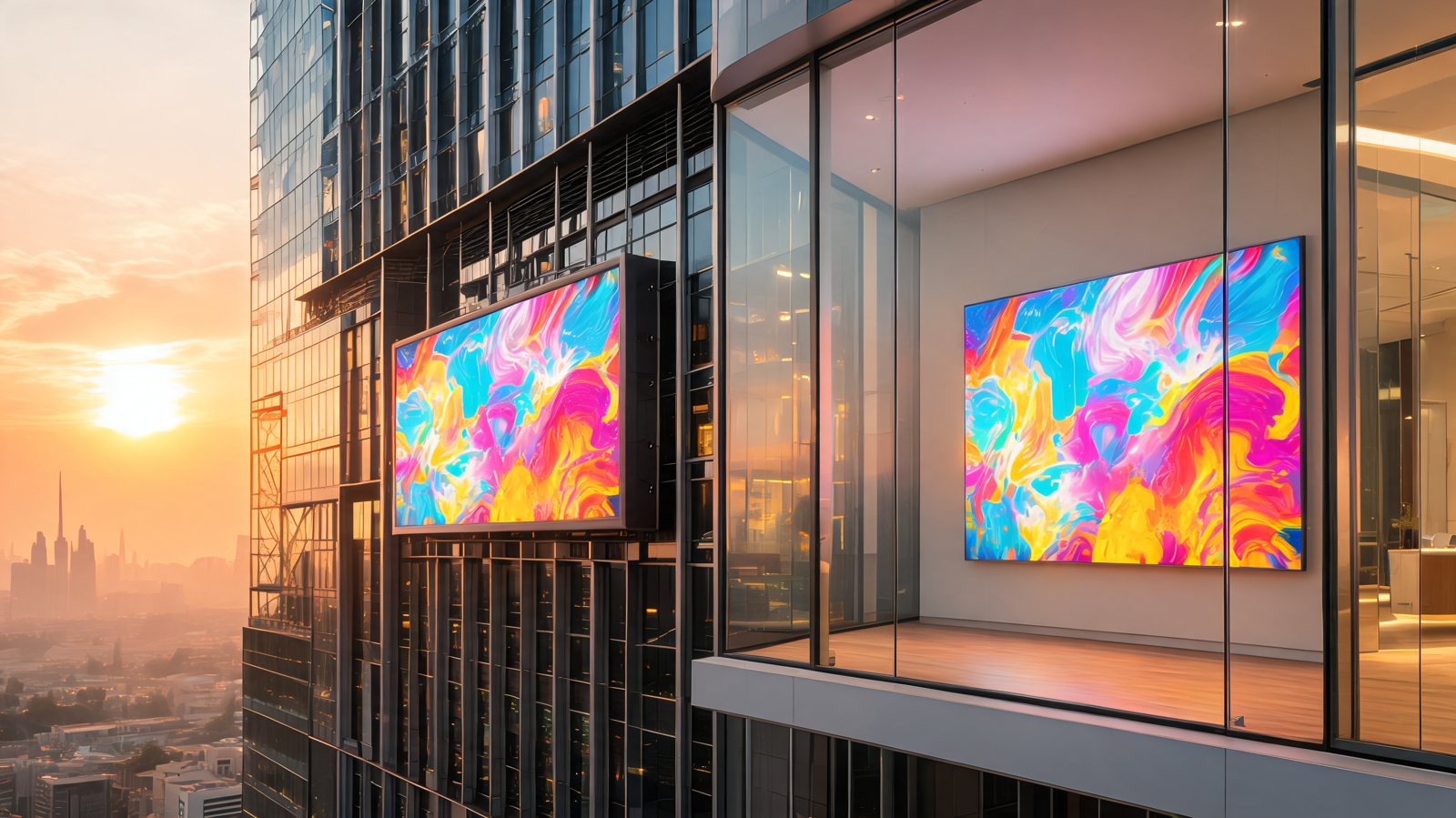
A screen behind glass facing the street is technically indoors, but the sun shining through the window can wash it out. For windows we use high-brightness indoor screens (about 2,500–4,000 nits) or transparent LED. Covered outdoor areas, such as a shaded terrace or car-park entrance, still need outdoor-rated screens because of heat, humidity and dust.
UAE conditions to plan for
- Summer heat above 45 °C and direct sun on the screen face.
- Fine dust and sandstorms — sealing and cleaning matter.
- Humidity on the coast, which can cause condensation inside poorly sealed cabinets.
- Authority approvals for anything facing a public road.